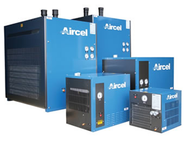
Compressed Air Dryer Choices For Real World Indust…
Posted by AVP on Apr 29th 2026
A compressed air dryer is one of those pieces of equipment nobody thinks about until water shows up where it should not. We see it all the time in plants, labs, and even small shops that thought a little moisture was “no big deal” until valves stick, tools die early, or a sensitive instrument starts drifting for no obvious reason.
We like to start from the simple truth. Compressed air is a utility. If you do not treat it like one, it will quietly cost you more than you think.
Why Moisture in Compressed Air is Never Harmless
Every compressor pulls in whatever the room gives it. Dust, oil vapor, humidity. Then it squeezes that air, which raises the relative humidity. Once the line cools down to the pressure dew point, that vapor turns to liquid and now you have condensate in the system.
That mix of water, oil, and dirt is not just “a little damp.” It is corrosive and abrasive. It eats pipe from the inside. It throws rust flakes into filters. It washes the oil film off tools and actuators so metal scrapes against metal. People blame the equipment. Most of the time, the water started the story.
Where a Compressed Air Dryer Actually Belongs in Your System
We design around this simple idea. The farther moisture travels downstream, the more things it can ruin. So the compressed air dryer belongs in the main utility line, after cooling and filtration, not buried at the end of a random branch.
Dryer, prefilter, afterfilter. That combination sets your baseline quality. Local point of use filters can clean things up more, but they cannot fix a wet header. Once condensate has moved through a network for years, you start seeing rust and slime in places nobody wants to open. It is much cheaper to dry early than to repair late.
Refrigerated Dryers That Actually Match the Job
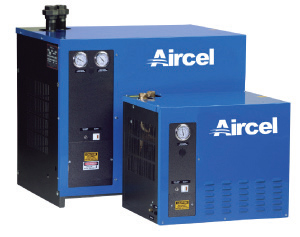
For general plant air, a refrigerated style is usually the right starting point. It cools the air, condenses out water, drains it, and gives you a dew point in the typical 2 to 10 degree Celsius range. Good enough for a lot of industrial work.
Where it gets interesting is how you handle different load profiles. Our non-cycling refrigerated compressed air dryer is the simple, tough option for systems that run hard and steady. The refrigeration circuit runs at a constant level, which makes sense when the plant air demand is basically flat and you care more about reliability than squeezing every kilowatt.
If your demand fluctuates all day, you end up giving money away with that approach. That is where a high-capacity cycling refrigerated air dryer earns its keep. It ramps cooling effort to match the real load, using stored thermal mass or variable control to cut power use when air demand drops. Same target dew point, but with energy use that actually respects what the plant is doing.
Then there is the problem in many small facilities. A hot little piston compressor with no aftercooler, blowing air out at something like 180 to 200 degrees Fahrenheit. A standard refrigerated unit will hate that. For that setup, a high-inlet-temperature refrigerated air dryer makes the most sense because it is built to take that hot air and perform precooling and drying in one package. Handy in tight mechanical rooms and small shops where nobody wants a maze of extra piping.
When a Compressed Air Dryer Has to Go Way Below Freezing
Once you start dealing with outdoor lines in cold weather or high-compliance production, refrigerated units hit their limits. A dew point around 35 to 50 degrees Fahrenheit is fine until the ambient drops under freezing. Then any remaining moisture can freeze in control lines, block instruments, and cause those fun winter breakdowns.
In that case, the only realistic option is a desiccant-style compressed air dryer that pulls the dew point down to minus 40 and below. Now you are not just protecting against corrosion. You are preventing ice in the smallest capillary tube in the system. You are also hitting the moisture side of ISO 8573 classes that show up in pharma, electronics, and similar high-purity work.
It is not free. Desiccant needs protection from oil and liquid water. It needs regeneration, which can cost you purge air or heater power. The payback is stability in places where unplanned downtime is a much bigger bill.
Sizing, Load, and Other Details That Matter
Dryers rarely fail in mild weather. They fail on the hottest day, with the highest load, right when production is already stressed. That is why we always size against the worst case. Highest inlet temperature, highest flow, realistic pressure, and realistic ambient.
You also need to know your load profile. A plant that sits at eighty to ninety percent of capacity all shift can live just fine with a non cycling style. A plant that surges, then idles, then surges again, will see real savings with a cycling design. Same story in smaller shops, where a high-inlet-temperature unit can replace separate aftercoolers and extra hardware. Simple sometimes wins.
If you are sorting out compressed air treatment for a plant, a lab, or a mixed site with outside lines and sensitive equipment, we are happy to walk through the details with you. We help match the right compressed air dryer technology, the right refrigerated style, and the right dew point target to what you actually do, not just what a catalog chart says.
That is the part that protects your equipment, your data, and your budget at the same time.