How a Zero Loss Drain Valve Stabilizes Your Entire…
Posted by AVP on Apr 29th 2026
A zero-loss drain valve is essential for the health of your compressed air system. Poor condensate management leads to issues like corroded receiver tanks, saturated filters, and moisture problems often misattributed to the dryer.
Many systems often use inefficient manual, timed solenoid, or standard float drains. For instance, a partially open manual valve causes the compressor to run longer and results in unstable system pressure. Though inefficient, these methods persist as production continues.
Timed solenoid drains feel smarter on paper. In reality they fire on a schedule that has nothing to do with how much condensate you actually have.
Mechanical float drains fail when rust and scale cause them to stick. Stuck open means hissing air and high energy bills. A stuck closed valve causes condensate backup and water problems.
A modern Zero Loss Drain Valve (ZLDV) works simply: Stay shut until liquid reaches a set level, open briefly to dump it, and then seal before losing any compressed air.
Where a Zero Loss Drain Valve Quietly Earns its Keep
Condensate forms wherever hot compressed air cools, so draining must occur at all collection points.
Start at the aftercooler and receiver tank; the receiver is a major trap whose collected water causes rust and necessitates tank replacement if not drained.
Next, both refrigerated and desiccant dryers remove moisture and require reliable outlet draining. If the drain sticks closed, water stays in the system.
Finally, filter bowls, piping low points, and drip legs all collect water. Near lab bench drops, water slugs can damage instruments. Installing Zero Loss Drain Valves (ZLDVs) in all these spots removes condensate and prevents its return.
Draining condensate across the network stabilizes pressure by eliminating artificial demand from air-dumping drains. This leads to consistent tool performance and ends reports of "moody" lines, confirming correct drain sizing and placement.
Choosing the Right Zero Loss Drain Valve for Air and Vacuum
Selecting the correct Zero Loss Drain Valve (ZLDV) depends entirely on the application, not marketing.
For systems involving vacuum, the RD11 VAC is recommended. For systems involving pressure, the RD11 is recommended.This heavy-duty, fully pneumatic unit requires no electricity, making it ideal for hazardous or remote areas. It uses a magnetic float to isolate the drain reservoir, then pressurizes the chamber to expel condensate without compromising vacuum stability. Its stainless steel internals and Viton seals ensure longevity against corrosive and hot, oily condensate.
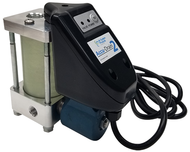
For standard compressed air systems where electricity is available and contamination is heavy, the ACD2 Accu Drain with Posi Valve is a better fit. This electrically-actuated design uses a straight-thru flow valve body to expel heavy rust and scale that would clog other solenoids. It includes diagnostic lights and an override switch.
Choose the RD11 VAC for vacuum systems or intrinsic safety needs; choose the ACD2 for heavily contaminated standard compressed air where electric power is suitable.
How a Zero Loss Drain Valve Helps Your Instruments Sleep at Night
Laboratories and clean production areas care less about dramatic volumes and more about stability. Stable pressure. Dry, clean air. No spikes. No surprise moisture blowing through a sensitive instrument.
ZLDVs, crucial for CDA headers, are installed downstream of the receiver tank, after dryers, beneath main filters, and at distribution low points, particularly before long bench runs feeding high-end pneumatic equipment like chromatography systems and spectrometers.
What happens if you do not do this. A timed drain fires, dumps air, the compressor races to catch up, line pressure dips right when an instrument is mid run. Then you have strange data, failed calibrations, error codes that show up every few days and never at the same time. Technicians lose trust in the air supply, and you spend a lot of time explaining why the instrument is fine, the air is not.
With properly selected ZLDVs, the compressor does not see those artificial ups and downs. It runs to cover real demand, not extra load from drains. You get less cycling, less mechanical wear, and air that feels boring. Boring in compressed air is very good.
Keeping Your Zero Loss Drain Valve Honest Over the Long Haul
Even the best hardware needs a way to prove it is still doing its job. That is why we like simple, visible features more than fancy graphs.
On both the RD11 VAC and the ACD2 Accu Drain, the translucent reservoir gives you a quick reality check. If the pot stays full and you never hear a discharge, something is wrong. If it cycles often and you never see standing liquid, you are in good shape. Two seconds of looking beats a long troubleshooting session.
The test button on the RD11 VAC and the manual override on the ACD2 matter for the same reason. During preventative maintenance, you hit that control, watch the valve open, confirm that condensate actually leaves the line. No guessing. No “it should be fine” notes in the log.
The ACD2's two indicator lights aid diagnostics: one for power, one for a drain request.
- No drain light with a full reservoir indicates a faulty switch or wiring.
- Drain light on but no drain indicates a mechanical issue.
Maintenance teams value this clarity. Ensure lasting reliability by properly sizing drains for the condensate load and performing consistent weekly/monthly checks (verifying sight bowls, testing buttons, noting irregularities).
When you match the right valve to the right application and give it that small amount of attention, condensate stops being a constant source of surprises. Your compressors work less. Your instruments complain less. And your air system finally behaves the way the brochure promised on day one.