What Your CNC Shop Demands From a 20 HP Air Compre…
Posted by AVP on Apr 24th 2026
You don’t really notice your 20 hp air compressor at first. It sits there, runs, does its job. Then your shop grows. More machines come in, cycles stack up, and suddenly that same system starts working a lot harder than you expected.
Most shops begin with modest demand. One CNC, a few tools, some air for cleanup. It feels manageable. Then production ramps. Air stops being occasional and becomes constant. That’s when a 20 hp air compressor shifts from background equipment into something your entire operation leans on.
Where a 20 HP Air Compressor Runs Your Entire Floor
Walk through any CNC shop and you’ll see electrical power everywhere. That’s obvious. What’s less obvious is how much compressed air runs behind the scenes, all day.
A 20 hp air compressor feeds multiple systems at once. Tool changers cycle nonstop. Pneumatic clamps hold parts steady. Chip blow-offs fire constantly. None of these pause just because airflow dips.
Mid-shift, when machines stack cycles together, your 20 hp air compressor CFM becomes the number that decides whether everything runs clean or starts slipping. That’s where sizing stops being theoretical and becomes real.
A rotary screw air compressor 20 hp setup handles this kind of demand better. It delivers steady flow instead of bursts. Shops running longer shifts lean toward that consistency because it keeps pressure stable when multiple machines pull air at once.
You’ll also see setups like a 130 gallon air compressor 20 hp configuration. That extra storage gives breathing room during spikes. It smooths out demand when several machines clear chips at the same time.
This is where things click. The air system isn’t supporting production. It’s part of production.
Why a 20 HP Air Compressor Becomes The Sweet Spot For Growing Shops
There’s a pattern you start to recognize. A shop adds machines one at a time. Everything works fine until it doesn’t.
That’s usually when a 20 hp air compressor enters the picture.
In most real setups, this size supports three to six CNC machines without constant pressure drops. It balances capacity and efficiency. You don’t overspend, but you also don’t run on the edge.
Shops running intermittent jobs sometimes look at piston systems. But once production becomes steady, many move toward a three phase 20 hp air compressor paired with a rotary screw design. That setup handles continuous demand without fluctuation.
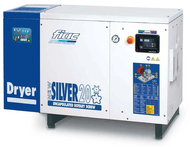
Some operators even look at units like the fiac silver 20 hp compressor when they want a reliable, packaged solution. It simplifies installation and gives consistent output without overcomplicating the system.
At this stage, the question shifts. You stop asking what compressor you need. You start asking what keeps your shop running without interruption.
That’s where the best 20 hp air compressor for shop setups stand out. They don’t chase specs on paper. They deliver stable pressure during real workloads.
The Small Pressure Drops Your 20 HP Air Compressor Can't Hide
Problems don’t show up as alarms. They show up as hesitation.
A tool changer pauses for a split second. A clamp feels slightly off. Chip clearing loses its edge. These feel like machine issues, but they usually trace back to air.
When a 20 hp air compressor runs near capacity, demand spikes expose every weak point. Pressure dips happen fast. Machines react immediately.
That’s where a heavy duty 20 hp air compressor setup earns its place. It holds pressure under load instead of chasing it. Shops that deal with tight tolerances can’t afford instability.
Air demand doesn’t stay flat. It moves with every cycle. Once multiple machines sync up, the system sees sudden pulls. If your compressor can’t keep up, the entire floor feels it.
That’s why many facilities step into a true industrial air compressor 20 hp configuration. It’s built for sustained output, not occasional use.
And once you experience stable pressure during peak hours, you don’t go back.
Air Quality Decides How Far Your 20 HP Air Compressor Really Goes
You can have the right compressor and still run into problems. That’s where air treatment comes in.
Moisture builds up fast in compressed air systems. It doesn’t stay visible. It travels through lines and settles inside components. Over time, it wears things down.
Most shops pair their 20 hp air compressor with refrigerated dryers right after compression. That step removes moisture before it reaches the machines.
Filtration comes next. Fine particles can slip into valves and actuators if you don’t catch them early. Once inside, they cause slow damage that shows up later as performance issues.
A complete system matters. Compressor, storage, drying, filtration. They work together. When one part falls short, everything else feels it.
That’s why a properly built setup around a 20 hp air compressor holds up under real conditions. It protects the machines that depend on it.
What Happens When Your 20 HP Air Compressor Finally Becomes Essential
At some point, every shop hits the same realization. Air isn’t optional. It’s part of the workflow.
Tool changes depend on it. Fixtures rely on it. Cleanup systems need it to keep production moving.
That’s when a 20 hp air compressor stops being a piece of equipment and becomes infrastructure.
You don’t think about it when it works. You feel it immediately when it doesn’t.
And once your shop reaches that level, you start building around it. You choose the right configuration. You size storage correctly. You treat the air before it reaches the machines.
Because the goal isn’t just airflow, it's stability.
And in a shop that runs tight schedules and tighter tolerances, a 20 hp air compressor becomes one of the few things you can’t afford to get wrong.