Why Point-of-Use CO Extractors Are Essential for P…
Posted by AVP on Apr 29th 2026
Premium olive oil producers focus on cold extraction, clean storage tanks, and nitrogen blanketing. But gas purity often receives less attention. CO extractors help remove carbon monoxide from compressed air systems that support labs, packaging lines, and nitrogen generation. For facilities producing high-purity, solvent-free, heat-sensitive compounds, this detail matters more than most realize.
Olive oil chemistry is sensitive. Polyphenols and aroma compounds respond to small changes in the environment. When compressed air feeds nitrogen generators or laboratory systems, contamination becomes part of the process. Carbon monoxide is rarely monitored in food plants. Yet it can affect gas quality and analytical accuracy. That is where point-of-use CO extractors become important.
Olive Oil Purity Depends on More Than Temperature Control
Cold extraction protects flavor and slows oxidation. Most producers monitor temperature closely. But purity is not controlled by temperature alone.
Gas composition affects stability. Nitrogen blanketing reduces oxygen exposure in storage and bottling. Laboratories rely on clean carrier gases for peroxide testing and volatile analysis. These systems often depend on compressed air somewhere upstream.
If that air contains moisture, oil, or carbon monoxide, it adds risk. HACCP plans often focus on microbes and particles. Gas contaminants are less visible. For export-focused facilities, compliance standards continue to rise. Gas integrity must be part of quality control.
Where Compressed Air Quietly Touches the Process
Compressed air moves through more of the plant than many expect. Pneumatic valves control flow. Bottling lines depend on actuators. Nitrogen generators use compressed air as feed gas. Laboratory instruments rely on stable air supply.
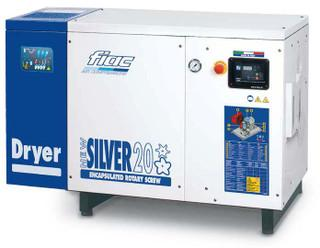
A system often begins with an air compressor such as the FIAC Silver 20/500 Rotary Screw Air Compressor. This 20 hp unit provides steady output for mid-sized operations. After compression, air leaves hot and full of vapor. An air-cooled aftercooler, like the Van Air AC Series, lowers temperature and removes bulk moisture.
Next, a refrigerated dryer removes more water. Facilities may choose non-cycling, high-inlet temperature, or high-capacity cycling models based on load. Coalescing filters such as Van Air’s F200 series remove oil aerosols and fine particles before air moves downstream.
Moisture indicators provide quick visual confirmation of dew point levels. These simple color-changing devices help operators confirm drying performance. Each component prepares air for use. None of them remove carbon monoxide. That requires a different approach.
Why CO Extractors and Desiccant Drying Matter in High-Purity Zones
High-purity zones need tighter control. This is where CO extractors and advanced drying stages make a difference.
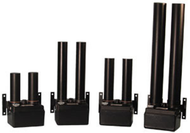
The VCM Series CO Catalyzer / Dryer uses a CARULITE catalyst layer to convert carbon monoxide into carbon dioxide. After conversion, dual towers filled with 4A molecular sieve remove moisture and the resulting CO2 using pressure swing adsorption. Contaminants are vented during regeneration. Clean, dry, CO-free air exits the unit.
This process supports stable lab performance. Carbon monoxide can interfere with detector response in gas chromatography. Moisture can cause drift and inconsistent readings. When facilities validate antioxidant levels or export documents, repeatability matters.
In many installations, a regenerative desiccant dryer is placed before the catalytic stage. Large heatless compressed air dryers achieve very low dew points. Dry air protects the catalyst and improves adsorption performance. Stable dew point means stable purification.
For olive oil plants producing heat sensitive compounds, consistency is critical. Solvent free extraction depends on process stability. Removing carbon monoxide at the point of use reduces one more source of variation.
When CO Extractors Outperform Centralized Air Treatment
Some facilities consider upgrading the entire plant to ultra-high purity air. This increases cost and energy use. It also adds complexity.
Point-of-use CO extractors focus purification only where needed. Labs, nitrogen generators, and controlled atmosphere zones receive high-purity air. The rest of the plant operates on properly treated standard air.
This targeted approach reduces system load. It avoids oversizing central dryers. It simplifies maintenance planning.
After catalytic conversion turns CO into CO2, some systems add a polishing stage. A CO2 adsorber can remove remaining carbon dioxide and moisture. PUREGAS Carbon Dioxide Adsorber-Dryers use 13X molecular sieve in dual towers. CO2 is removed during regeneration. Clean, dry air continues to the process.
This extra stage supports sensitive lab instruments. It also benefits applications where low CO2 levels are required. Combining desiccant drying, catalytic oxidation, and optional CO2 adsorption creates layered protection without redesigning the entire facility.
How Condensate Management Supports CO Extractors and System Stability
Every dryer and filter generates condensate. That liquid contains water, oil, and removed contaminants. Ignoring condensate handling weakens the entire system.
Oil carryover can affect purification media. Proper condensate separation reduces environmental risk and disposal cost. Clean upstream conditions extend catalyst life and improve adsorption cycles.
High-purity air begins with strong fundamentals. Aftercooling, filtration, and moisture removal must work together. When upstream components perform well, downstream CO extractors operate more reliably.
A Practical System Layout for Premium Olive Oil Facilities
A structured layout helps maintain control:
FIAC Silver 20/500 Rotary Screw Air Compressor
- Van Air AC Series Aftercooler
- Refrigerated Air Dryer
- Van Air F200 Coalescing Filters
- Large Heatless Regenerative Desiccant Dryer
- VCM Series CO Catalyzer / Dryer
- Optional CO2 Adsorber
- Nitrogen Generator or Laboratory Equipment
Each stage has a clear purpose. The compressor supplies air. The aftercooler lowers temperature. The refrigerated dryer removes bulk moisture. Coalescing filters capture oil aerosols. The desiccant dryer lowers dew point further. The catalytic unit removes carbon monoxide. The optional CO2 adsorber provides final polishing.
This approach protects high-purity zones without overengineering the entire plant. Carbon monoxide may not be the first contaminant olive oil producers consider. Yet it can affect analytical stability and gas integrity. As quality standards rise, focused use of CO extractors offers a practical way to protect product quality while maintaining efficient compressed air design.