Why Sourcing Desiccants for Air and Gas From One S…
Posted by AVP on May 29th 2026
Every compressed air system produces water. That’s not a rare condition. It’s built into how compression works. According to the U.S. Department of Energy, compressing air concentrates water vapor. The Compressed Air and Gas Institute confirms that a typical system can generate gallons of water per day. The harder the system runs, the faster that moisture builds. That reality makes desiccants for air and gas a required part of any serious operation.
Plant teams don’t struggle with one material. They handle multiple desiccant types, layered beds, and different gas-drying agents within the same system. When those materials come from different suppliers, coordination turns into guesswork. Lead times don’t line up. Specs don’t match. Maintenance windows get tighter.
Sourcing from one supplier clears that friction. It keeps moisture-removal air systems predictable and keeps maintenance grounded in a single set of standards.
Why Desiccants for Air and Gas Become a System Problem Fast
Moisture scales with load. Higher duty cycles bring more water into the system. Continuous operation keeps it moving downstream. Warm ambient air adds even more load before compression even starts.
That means every portable air compressor, every plant system, every line sees the same pattern. Moisture builds. It moves. It collects where it causes damage.
Inside most systems, you’ll find multiple adsorbent materials gas working together. Activated alumina handles bulk drying. Molecular sieve pushes toward deeper drying. Silica gel manages moderate conditions. Each material plays a role.
Here’s where it gets complicated. Each supplier may use slightly different formulations. Pore sizes vary. Regeneration tolerances shift. Performance curves don’t always align. That variation shows up during operation, especially when you’re chasing stable dew point control.
The Air-Conditioning, Heating, and Refrigeration Institute and International Organization for Standardization (ISO 8573) make one thing clear. Air quality depends on consistency. Moisture limits are defined. Systems must hold steady.
When your desiccants for air and gas come from different sources, consistency becomes harder to maintain. One supplier may rate performance differently than another. That difference shows up as drift in dew point.
Sourcing from one supplier removes that variable. It aligns materials under one performance standard.
Layered Systems Work Better When Desiccants for Air and Gas Match
Most industrial dryers don’t rely on a single material. They rely on layers. That’s how plants reach reliable drying performance.
A typical bed includes:
- Ceramic support media at the base
- Activated alumina for initial moisture removal air
- Molecular sieve for deep drying
- Sometimes silica gel for balance and cost control
This setup depends on compatibility. Airflow must stay even. Channeling must stay controlled. Each layer must respond correctly during desiccant regeneration.
When materials come from different suppliers, alignment becomes harder. Regeneration temperatures may differ. Pressure drop characteristics may not match. One layer can degrade faster than another.
That mismatch doesn’t show up immediately. It builds over time. Eventually, the system loses efficiency. Dew point starts drifting. Maintenance teams start chasing the issue.
Keeping desiccants for air and gas under one supplier keeps those layers aligned. The materials are designed to work together. Regeneration cycles stay predictable. Bed performance stays stable.
Activated Alumina Still Carries the Load
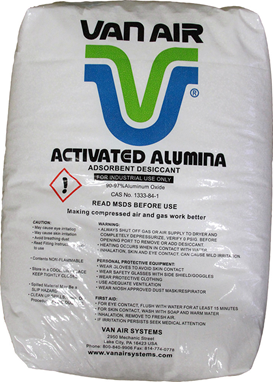
Activated alumina remains one of the most widely used compressed air desiccant materials. It handles bulk moisture removal with consistency. Its structure holds up under repeated cycling.
It works well in:
- Instrument air systems
- Natural gas dehydration
- Vacuum pump protection
- General plant air drying
It performs reliably under moderate temperatures and pressures. It also integrates easily with other gas drying agents inside layered beds.
When sourced alongside other materials, activated alumina becomes easier to manage. Engineers don’t need to reconcile specs across vendors. They can treat the system as one unit.
Molecular Sieve Handles the Final Drying Stage
Some systems need deeper drying. That’s where molecular sieve comes in. Its uniform pore structure allows it to trap smaller molecules and reach lower dew points.
Common types include:
- 3A for hydrocarbons
- 4A for general drying
- 5A for separation
- 13X for large-scale purification
These materials push performance further. They support applications that demand strict moisture limits.
They also require tighter control. Higher regeneration temperatures. More precise system design. That makes compatibility even more important.
Using a single supplier for desiccants for air and gas keeps those requirements aligned. It ensures each sieve type fits the system design without introducing variability.
Silica Gel Keeps Systems Balanced
Silica gel plays a different role. It performs well in moderate humidity conditions. It absorbs moisture efficiently without needing extreme regeneration conditions.
You’ll find it in:
- Laboratory systems
- Storage environments
- Vacuum applications
- Supporting layers in drying beds
It also offers flexibility during desiccant regeneration. Lower temperature cycles help reduce energy use.
When combined with other desiccant types, silica gel helps balance performance and cost. It supports systems that don’t need extreme drying but still require reliability.
Sourcing it alongside other materials keeps planning simple. Maintenance teams understand how each layer behaves within the same system.
Maintenance Gets Easier When Desiccants for Air and Gas Come From One Source
Maintenance teams deal with real constraints. Limited downtime. Tight schedules. Pressure to keep systems running.
When materials come from different vendors, small issues stack up:
- Conflicting regeneration specs
- Different replacement intervals
- Mismatched delivery schedules
- Unclear compatibility between layers
That friction shows up during maintenance windows. It slows decisions. It increases risk.
With a single supplier, those variables shrink. Teams get one set of specifications. One point of contact. One consistent approach to system performance.
That clarity improves:
- Dew point control stability
- Replacement planning
- Troubleshooting speed
- Overall system uptime
It also reduces the risk of premature failure due to material mismatches.
The Practical Advantage of Staying Consistent
Plants don’t operate in theory. They operate under load. Moisture keeps entering the system. Equipment keeps running. Downtime costs money.
Keeping desiccants for air and gas under one supplier creates consistency where it matters. It keeps materials aligned. It keeps regeneration predictable. It keeps performance stable.
Air & Vacuum Process supports that approach with a full range of compatible materials designed to work together inside real plant systems. For operations that rely on steady drying performance, sourcing desiccants for air and gas from one supplier keeps maintenance focused and systems running.