Zero Loss Drain Valve Failure Starts Upstream: Wha…
Posted by AVP on May 19th 2026
A zero loss drain valve is one of those components you never think about, until water shows up where it shouldn't. Lines start spitting. Pneumatic tools stall. Dryers struggle to keep up. And suddenly, the smallest component in your air process equipment is costing you real money.
Most maintenance teams respond by focusing on the drain itself. They swap it out, clean it, replace it again, and watch the same problem return weeks later. The real issue almost always sits upstream, where oil mixes with moisture and turns ordinary condensate into something far more aggressive. Research from the U.S. Department of Energy and manufacturers like Kaeser Compressors confirms what experienced operators have known for years: condensate routinely carries oil, particulate, and acidic compounds, and that mixture fundamentally changes how every drain in the system behaves.
This is where smart buyers stop guessing. Instead of evaluating drains on paper specs, they look at how the system behaves under load.
How Oil Carryover Degrades Zero Loss Drain Valve Performance
Every zero loss drain valve depends on one thing: clean, predictable movement. Whether the unit relies on a float, an electronic sensor, or a pneumatic trigger, it has to react accurately to the presence of liquid. Oil carryover changes the nature of that liquid.
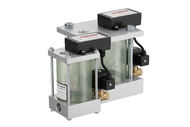
Oil creates a film that clings to internal surfaces, traps debris, and gradually thickens into sludge. You see the effects first in electronic units like the ACD2, ACD3, and ACD5 Accu-Drain Zero Loss Condensate Drains. These systems collect condensate in a reservoir, where a stainless level switch rises with the liquid and signals the posi valve to open. It's a precise design, and it works beautifully on clean condensate.
But the float doesn't move cleanly through oily liquid. The sensor gets coated. Discharge timing drifts. You start to see delayed draining or inconsistent cycles, even though the drain still has power, still lights up, and still appears functional from the outside.
Parker Hannifin and Atlas Copco both document this pattern in their service literature: contaminated condensate leads to stuck floats and fouled sensors, and the decline spreads outward across the entire industrial air handling system. Moisture backs up. Filters end up carrying load they weren't designed for. Dryers compensate until they can't. By the time the symptoms become obvious, you've already lost meaningful process efficiency.
Drain Design Determines How Much Abuse the System Can Absorb
Not every drain responds to contamination the same way, and the differences become pronounced once oil and sludge enter the picture.
Consider the RD750-T Zero Loss Pneumatic Robo-Drain Valve. This unit runs without electricity, using a float and a full-flow ball valve. Stainless steel internals resist corrosion, an integral strainer blocks debris, and the valve only activates when condensate actually builds in the reservoir. That design tolerates abuse better than most electronic alternatives—ball valves handle heavier contaminants, stainless components shrug off acidic mixtures, and the visible reservoir lets operators verify performance at a glance. In high-pressure environments, those advantages matter.
Oil still changes the equation, though. Sludge accumulates inside the strainer, flow thickens, and the float reacts more slowly. The valve continues to work, but it responds later than it should, and those delays compound across a full system cycle.
The challenge scales further with the RD13-LP-T Zero Loss Pneumatic Robo-Drain Valve, which is designed to handle the much larger volumes found near aftercoolers. Placement is the issue. Aftercoolers produce the dirtiest condensate in the entire system: oil is still warm and mobile, water condenses rapidly, and particulate hasn't yet passed through downstream filtration. The result is thick emulsions arriving at the drain before anything else has had a chance to clean them up.
Even a heavy-duty zero loss drain valve has to work harder in that environment. Maintenance cycles tighten, strainers clog faster, and operators spend more time verifying performance. That's why drain selection can't happen in isolation. You match the design to the type of contamination it's going to face at its specific location in the system.
What Drain Behavior Reveals About Your Compressor
Most teams treat drains as accessories, components to replace when they fail rather than indicators worth monitoring. That mindset misses the bigger picture.
A zero loss drain valve functions as a signal point for everything happening upstream. Oil carryover doesn't stay hidden; it shows up at the drain before it shows up anywhere else. Industry standards like ISO 8573-1 define acceptable oil levels in compressed air, but real systems drift away from those targets as filters saturate and separators lose efficiency. When that drift happens, the drain tells you first through thick discharge, slower cycles, residue buildup, and inconsistent operation.
These symptoms don't point to a failing valve. They point to upstream conditions that need attention. Teams that ignore the signals end up in a cycle of component replacement with no measurable improvement. Teams that read the signals correctly check their separators, review the vacuum pump solutions tied into the same facility, evaluate how their industrial vacuum systems interact with compressed air infrastructure, and align their equipment maintenance schedules with actual system behavior rather than the calendar. That's where genuine process efficiency improvement comes from.
Drain Selection Affects the Rest of Your Air Process Equipment
A drain sits low in the system hierarchy, but its impact runs high. When it performs well, moisture exits cleanly, dryers stabilize, filters last longer, and downstream tools stay consistent. When it struggles, moisture carries forward, dryers overload, filters clog faster, and production starts to see variation.
That ripple effect touches everything from industrial vacuum systems to broader air handling setups, and it influences how teams evaluate technical specifications for vacuum pumps in facilities where air and vacuum systems operate side by side. Smart buyers factor all of this in when they evaluate options rather than chasing specs alone. They look at how equipment actually behaves under real contamination, and they prioritize features like visible reservoirs and manual test buttons that give operators verification without guesswork. Small features like those change how quickly teams can respond when something starts drifting.
What Maintenance Tells You That a Gauge Can't
Pressure gauges tell you one story. Drains tell you another.
When a zero loss drain valve starts cycling more slowly, something has changed. When residue builds faster than expected, something upstream has shifted. When discharge looks darker or thicker, contamination has increased. Operators who pay attention to those signals stay ahead of problems instead of reacting to them.
Research from manufacturers and energy authorities consistently points to the same conclusion: condensate composition drives maintenance frequency. Oil shortens service intervals, sludge shortens component life, and the principle applies across air compressors, dryers, vacuum pump solutions, and any shared infrastructure that connects them. Building equipment maintenance guides around real condensate conditions—rather than generic intervals—is what separates facilities that run smoothly from facilities that lurch from failure to failure.
The Right Drain Decision Shapes Reliability From Day One
A zero loss drain valve doesn't operate in isolation. It reflects everything happening upstream and influences everything downstream. The right choice involves balancing precision against durability, matching design to expected contamination, placing the unit where it can handle the load, and maintaining it based on what the system actually produces rather than what a manual recommends.
Experienced operators think this way because they've learned that drains aren't afterthoughts. They're the first place oil-laden condensate shows up, and the last place anyone wants to deal with it downstream. That's why every serious compressed air system deserves the right zero loss drain valve, selected with the same care given to the larger components it supports.